
TMJ-Related Trigger Points
Tight muscle knots in the jaw, neck, and head can drive TMJ pain that won’t respond to standard treatment. We find and release the trigger points fueling your symptoms.

About Trigger Points with TMJ Dysfunction
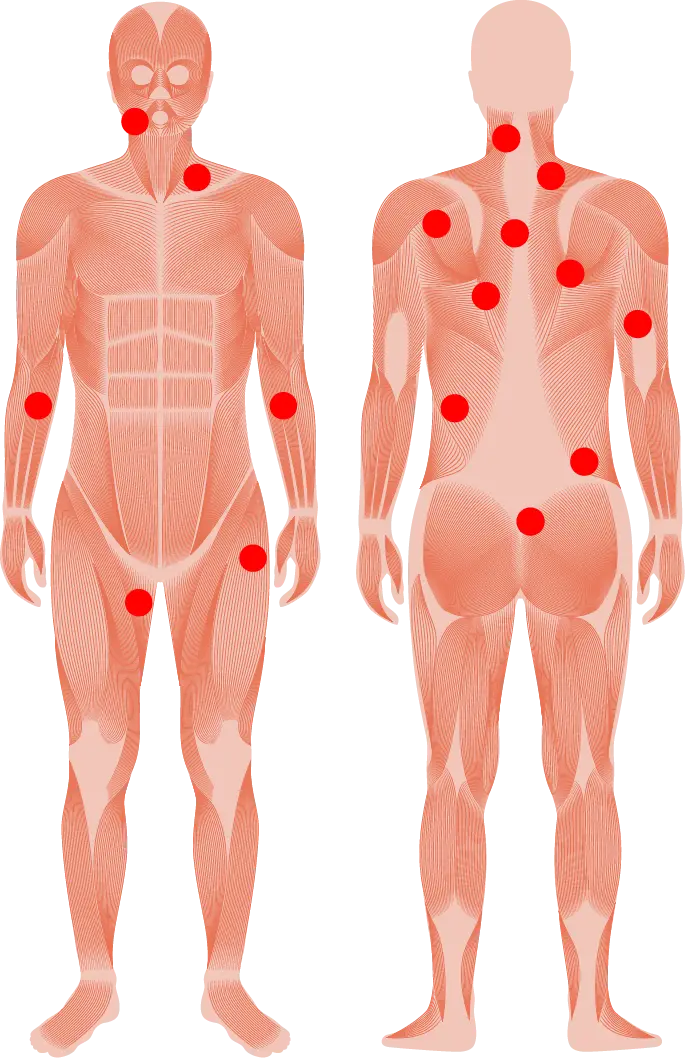
Trigger points are sensitive, tight areas of muscle tissue — often described as “knots” — that form due to overuse, injury, stress, or postural imbalance. When pressed, they feel tender and can “refer” pain to other parts of the body. With TMJ dysfunction, trigger points commonly develop in the jaw, neck, shoulders, and head — contributing to a complex web of pain that may not resolve without targeted treatment.
How Trigger Points Relate to TMJ Disorders
TMJ disorders often involve not only the joint itself but the surrounding muscles and soft tissues that control jaw movement. When trigger points develop in muscles like the masseter, temporalis, or sternocleidomastoid, they can mimic TMJ pain and make diagnosis more difficult.
Mimics TMJ Pain
Trigger points in jaw and neck muscles produce symptoms that feel like joint dysfunction — confusing diagnosis and delaying proper treatment.
Restricts Jaw Movement
Tight muscle knots limit normal opening and closing, sometimes radiating to teeth, ears, temples, or the back of the neck.
Intensifies Bruxism
Active trigger points can increase clenching and grinding, accelerating wear on teeth and aggravating joint damage.
Drives Chronic Headaches
Untreated trigger points are a frequent contributor to tension headaches and migraines that don’t respond to medication.
Left untreated, this network of pain can become chronic and significantly impact your daily life.
Common Symptoms
If any of these sound familiar, it may be time to consider whether myofascial trigger points are contributing to your TMJ disorder.
Deep, Aching Jaw or Facial Pain
A persistent ache rather than a sharp pain — often hard to point to one spot.
Pain Radiating to Ears, Temples, or Neck
Referred pain patterns that travel beyond where the muscle knot actually sits.
Discomfort When Chewing, Talking, or Yawning
Functional pain triggered by simple daily jaw movements.
Headaches or Migraines Resistant to Medication
Frequent tension headaches that don’t resolve with standard treatment.
Clicking, Popping, or Locking of the Jaw
Mechanical jaw symptoms that travel alongside the muscle pain.
Tightness or Fatigue in the Jaw or Face
A sense of constant tension — even at rest — that comes from overworked muscles.
Why Choose Us?
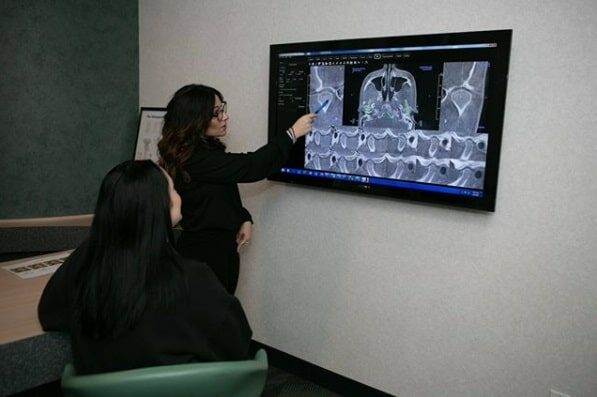
We take a comprehensive, whole-body approach to TMJ treatment — looking beyond the jaw to identify trigger points, muscular imbalances, and related dysfunction throughout the head and neck. Using advanced diagnostics and non-invasive techniques, we create personalized treatment plans that may include trigger point therapy, orthotics, physical therapy, and lifestyle guidance.
Our collaborative care model ensures that even complex cases receive the specialized attention they deserve. If you’re ready to stop chasing symptoms and start feeling better, schedule your consultation today.
Stop Chasing Symptoms. Start Feeling Better.
Let us find the trigger points driving your TMJ pain and build a treatment plan that addresses the source — not just the surface.
Schedule a ConsultationStart with a Simple TMJ and Sleep Screening
Do You Have TMJ?
Take our quick 2-minute assessment to find out if your symptoms may be related to TMJ disorder. Take TMJ Quiz
Sleep Apnea Risk?
Discover if your snoring, fatigue, or restless sleep could indicate sleep apnea with this brief screening. Take Sleep Quiz
Non Surgical Solutions
Our treatments focus on craniofacial pain and sleep-related breathing disorders.