Orofacial Pain & TMJ Disorder Treatment in Cleveland
Advanced, non-surgical care for jaw pain, headaches, facial tension, and the chronic symptoms that come with craniofacial pain — for adults and children alike.
Advanced Solutions for Jaw Pain, Migraines, Facial Tension, and Chronic Symptoms
At TMJ & Sleep Therapy Centre of Cleveland, we know just how complex craniofacial pain can be. The way it presents is highly varied, necessitating individualized treatment plans for each patient. A patient may have TMD, migraines, facial neuralgias, musculoskeletal pain, or a combination of any or all of the above.
TMJ pain is the condition that our patients most frequently turn to us for help with. TMD can cause significant pain affecting much of the craniofacial region. It can arise on its own, but is usually just one part of a complex series of issues.
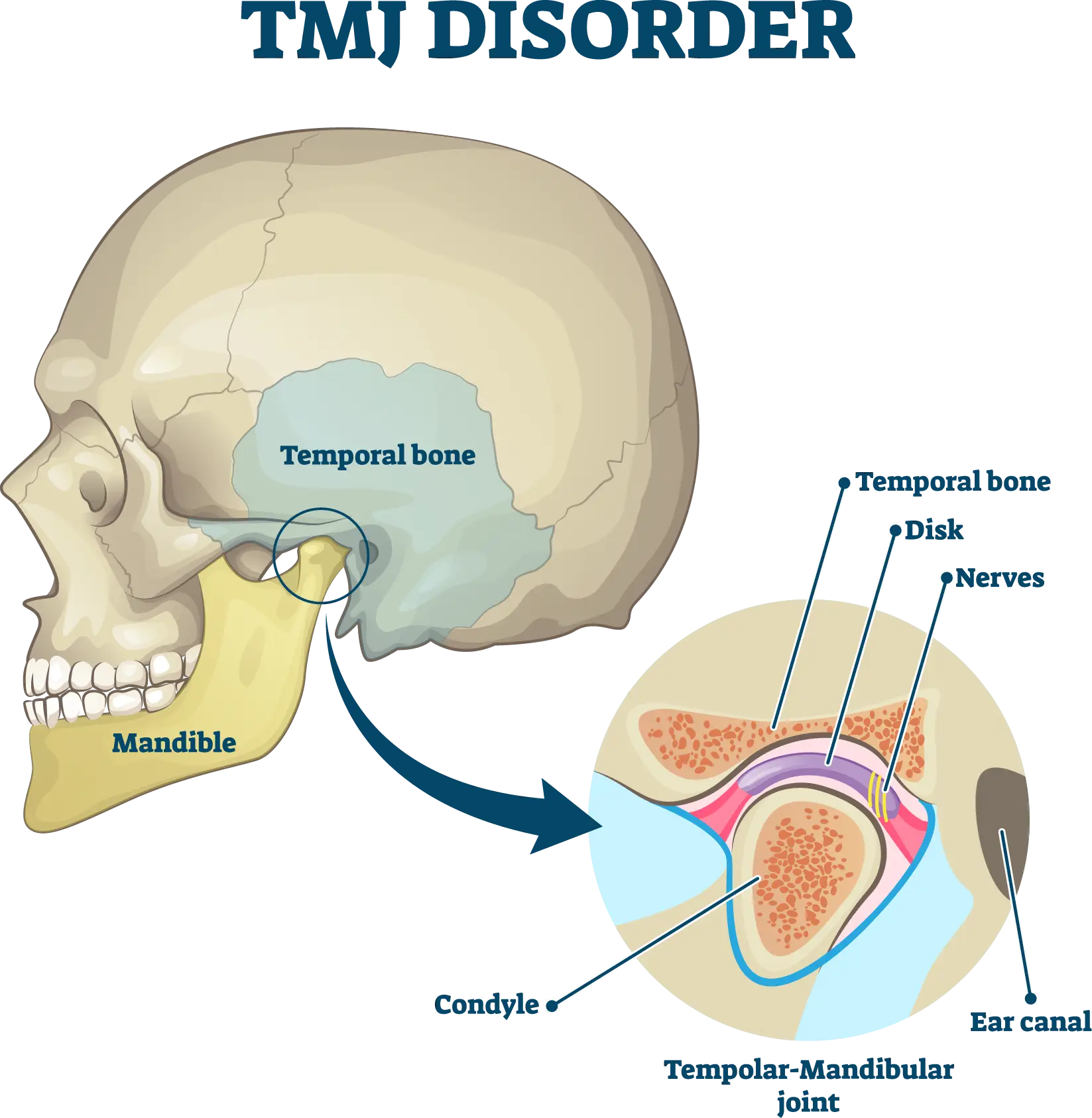
Some reasons TMJ pain develops are:
Car accidents
Trauma from car accidents can place sudden force on the jaw joint and surrounding muscles.
Sports injuries
Sports injuries can strain the jaw, neck, and facial structures, contributing to TMD symptoms.
Falls
Falls can create impact-related stress that affects jaw alignment, joint function, and muscle balance.
Clenching the teeth
Frequent clenching can overload the jaw joints and muscles, leading to pain and tension.
Grinding the teeth
Teeth grinding can wear down the bite and increase pressure on the jaw joint over time.
However, a frequent cause of TMD that many overlook is insufficient oxygen intake during sleep. We believe this to be the primary cause of TMJ pain. When the airway is obstructed, the body reacts in specific ways to prevent suffocation. One of these ways is grinding and clenching the teeth. When this action is repeated multiple times a night, the bones and joints can be worn down and damaged, causing pain.
Craniofacial Pain Services
The first step is diagnosing the condition causing the craniofacial pain. Once we have that diagnosis, successful treatment is possible. Our treatment plans are customized to the patient, offering different options for adults and children. A frequent — and often overlooked — cause of TMD is insufficient oxygen intake during sleep. When the airway is obstructed, the body grinds and clenches to reopen it. Repeated nightly, this damages the joints and bones, causing pain.
Car & Sports Injuries
Trauma from accidents, falls, and impact sports is a leading cause of TMJ pain.Clenching & Grinding
Often a nighttime reflex tied to airway obstruction — damaging joints over time.Airway Obstruction
Insufficient oxygen at night triggers the bite response that wears down the jaw.Orofacial Pain Relief for Adults (TMD/TMJ)
Facial pain, headaches and jaw problems are frequently only a symptom secondary to a greater problem affecting the body, much like a fever is secondary to the common flu.
Craniofacial Pain Services for Adults
May include one or more of the following:
- Comprehensive diagnostics
- Non-surgical treatment plan for rehabilitation
- Decompression appliance therapy (short-term wear of custom orthopedic oral orthotics — not splints)
- Nutritional counseling
- Medication and supplement regimens
- Physical medicine treatment (laser therapy, trigger points, prolo therapy, phonophoresis)
- Multi-discipline referral coordination
Proper diagnosis and emphasis on origin rather than symptoms alone is key to successful, long-term treatment results. After proper diagnosis, a specific non-surgical treatment plan for rehabilitation is developed for the unique needs of each individual patient.
Symptoms
- Headaches — recurring or chronic
- Earache or ear stuffiness / ringing
- Neck pain or stiffness
- Facial pain
- Jaw joint sounds — clicking, popping, grating
- Limited ability to open or close mouth
- Jaw locking (opened or closed)
- Sensitive, loose or worn-down teeth
- Pain or soreness in the TM joints
- Dizziness or difficulty chewing / swallowing
- Pain behind the eyes
- Extreme sensitivity to light
Orofacial Pain Treatment for Children (TMD/TMJ)
The good news with children is that they are still in a developmental stage — the earlier the problem is diagnosed and treated, the better the results!
Craniofacial Pain Services for Children
May include one or more of the following:
- Comprehensive diagnostics
- Non-surgical treatment plan for rehabilitation
- Orthopedic orthodontic development
- Nutritional counseling
- Supplement regimens
- Physical medicine treatment (laser therapy, phonophoresis)
- Multi-discipline referral coordination
Orofacial pain, though most often thought of as an adult disorder, can present in children at an early age. It may be milder — or simply seem milder — because these young children have always had symptoms of jaw pain, headaches, or difficulty with normal functions like opening, chewing, swallowing, and speaking. They assume the pain and difficulty are normal. Left undiagnosed and untreated, the symptoms and condition increase with age.
Pediatric Symptoms Indicating the Need for Treatment
- Headaches — recurring or chronic
- Earache or ear stuffiness / ringing
- Neck pain or stiffness
- Facial pain
- Jaw joint sounds — clicking, popping, grating
- Limited ability to open or close mouth
- Jaw locking (opened or closed)
- Sensitive, loose or worn-down teeth
- Pain or soreness in the TM joints
- Dizziness or difficulty chewing / swallowing
- Extreme sensitivity to light
- ADHD
- Bed wetting
Diagnose the Cause. Resolve the Pain. Schedule a Consultation.
Proper diagnosis — with an emphasis on origin rather than symptoms alone — is the key to successful, long-term results. Let's build a non-surgical plan tailored to your case.
Schedule a ConsultationStart with a Simple TMJ and Sleep Screening
Do You Have TMJ?
Take our quick 2-minute assessment to find out if your symptoms may be related to TMJ disorder. Take TMJ Quiz
Sleep Apnea Risk?
Discover if your snoring, fatigue, or restless sleep could indicate sleep apnea with this brief screening. Take Sleep Quiz
Non Surgical Solutions
Our treatments focus on craniofacial pain and sleep-related breathing disorders.