
Jaw clenching can be caused by stress, muscle imbalance, bite misalignment, or TMJ dysfunction. Many people clench their jaw muscles unconsciously, especially during periods of concentration or emotional stress.
Jaw Clenching

Are You In Need of Relief from Constant TMJ Jaw Clenching?
Persistent jaw clenching is the involuntary, excessive contraction of the jaw muscles, often resulting in tension and pain. The temporomandibular joint (TMJ) is especially susceptible to prolonged clenching, which contributes to jaw pain, headaches, and facial discomfort. If you clench during the day or wake with a sore jaw, it is important to address it promptly.
Jaw clenching, or bruxism, can lead to discomfort, headaches, and long-term oral health consequences. Our team provides tailored solutions that relieve symptoms and restore optimal jaw function.
Expert Care For Painful Bruxism
Our approach is comprehensive: specially designed oral appliances prevent excessive clenching and protect your jaw, while TMJ therapy restores proper joint function and addresses the root causes. With personalized treatment plans, we provide effective, lasting relief.
Not Sure Where to Start?
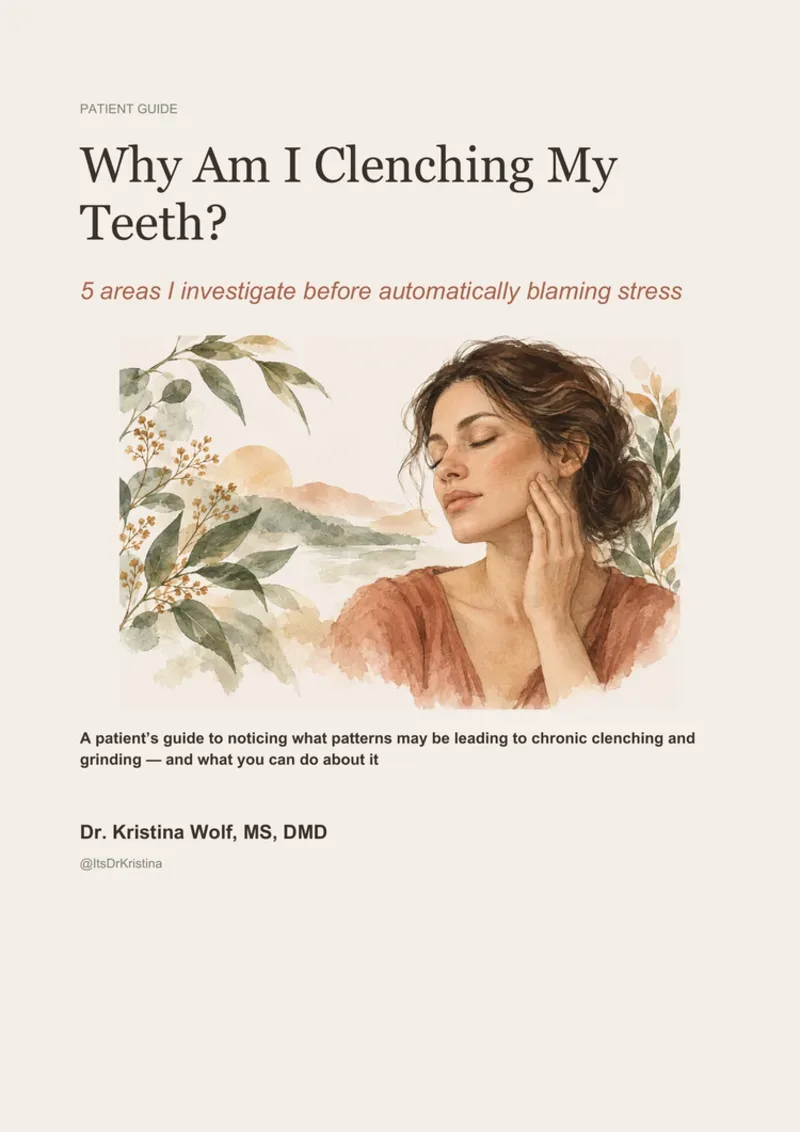
If you clench or grind your teeth and have been told it’s simply stress or your bite, there may be other factors worth exploring. Dr. Kristina Wolf’s 40-page guide, Why Am I Clenching My Teeth?, walks through five areas she considers clinically: breathing + sleep, pain + body load, medications + substances, GI + reflux, and stress + capacity.
Not a diagnosis, just a place to start. Ready for more? Learn about our new patient evaluation
Contact Us Today For Jaw Clenching Relief
If you are looking for relief from TMJ-related jaw clenching, the TMJ & Sleep Therapy Centre of Cleveland is here to help. Contact us today to schedule a consultation and take the first step toward improved oral health.
Frequently Asked Questions
Yes, daytime clenching is very common. It often occurs during work, driving, or stressful situations and can lead to jaw fatigue, headaches, and muscle soreness over time.
Yes. Clenching during sleep places excessive strain on the jaw joints and muscles, often contributing to morning jaw pain, headaches, or stiffness.
They are often part of a cycle. Jaw clenching can worsen TMJ symptoms, while TMJ dysfunction can increase muscle tension and trigger clenching behaviors both during the day and at night.
Treatment may include oral appliance therapy, muscle relaxation techniques, stress management strategies, and addressing bite or jaw alignment issues — all focused on reducing muscle strain and protecting the jaw joints.
You should seek professional evaluation if clenching is frequent, painful, or associated with headaches, tooth wear, or jaw stiffness. Early care can help prevent long-term damage to the jaw and surrounding structures.